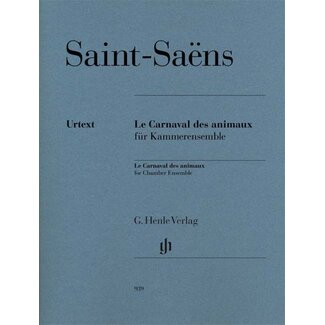
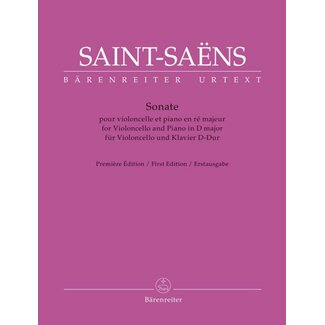
Written in March 1886 as a humorous occasional work for the traditional carnival concert organized by his cellist friend Charles-Joseph Lebouc, the Ca...More
Written in March 1886 as a humorous occasional work for the traditiona...
Camille Saint-Saëns composed his two Romances for Horn for two of the most respected French horn players of the time: Opus 67 in E major from 1866 is...More
Camille Saint-Saëns composed his two Romances for Horn for two of the...
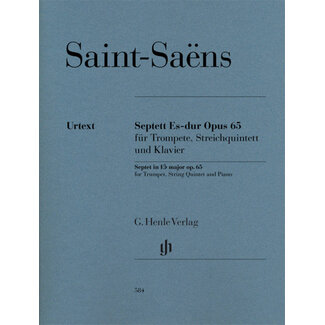
The septet was composed in 1879/80, commissioned for the Parisian Chamber Music Society “La Trompette”. Saint-Saëns had, however, hesitated for s...More
The septet was composed in 1879/80, commissioned for the Parisian Cham...
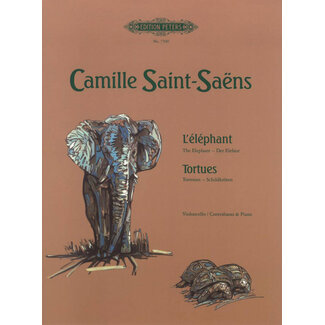
"The Elephant" and "Tortoises" are two distinct musical movements from Camille Saint-Saëns' Carnival of the Animals, often arranged for cello or do...More
"The Elephant" and "Tortoises" are two distinct musical movements fro...
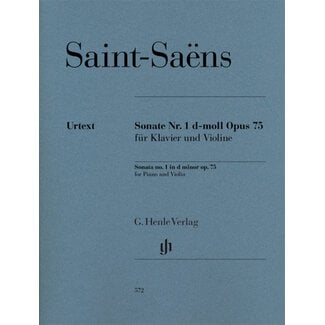
Originally planned only as a little duo for violin and piano, the composition grew into a sonata in autumn 1885. The first performances were more than...More
Originally planned only as a little duo for violin and piano, the comp...
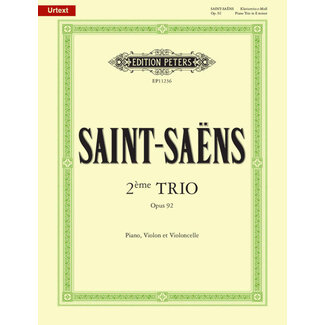
The Piano Trio No. 2 in E minor, Op. 92, was composed by Camille Saint-Saëns in 1892. It was premiered on 7 December 1892 at the Salle Érard in Pari...More
The Piano Trio No. 2 in E minor, Op. 92, was composed by Camille Saint...
Composed in 1887, Saint-Saëns' Havanaise was extremely well received from the very beginning, both in its original violin and piano form, published h...More
Composed in 1887, Saint-Saëns' Havanaise was extremely well received ...
Composed in 1887, Saint-Saëns' Havanaise was extremely well received from the very beginning, both in its original violin and piano form, published h...More
Composed in 1887, Saint-Saëns' Havanaise was extremely well received ...