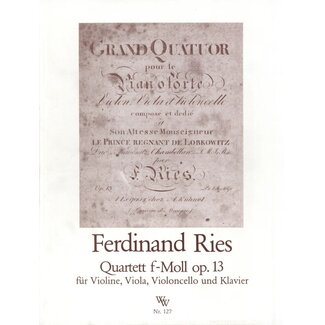
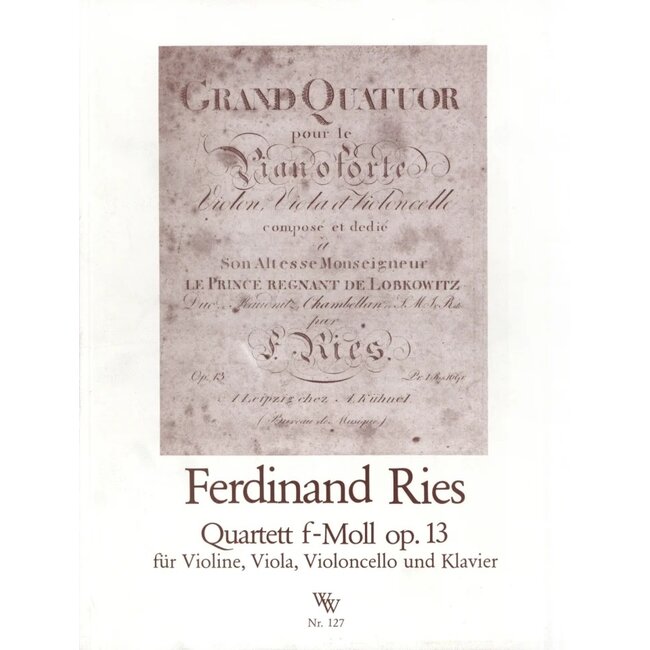
Discover the dramatic and expressive Piano Quartet No. 1 in F minor, Op. 13 by Ferdinand Ries, a hidden gem of the early Romantic era. Composed in 1808, this powerful chamber work for violin, viola, cello, and piano showcases Ries’ brilliance as a composer and his deep connection to his mentor, Ludwig van Beethoven. Perfect for fans of Beethoven, Schubert, and early 19th-century music, this quartet blends Classical elegance with Romantic intensity, making it a thrilling listen for both casual audiences and seasoned musicians. Ferdinand Ries (1784–1838), a German composer, pianist, and Beethoven’s student, friend, and biographer, was a prominent figure in his time. Born in Bonn, he studied with Beethoven in Vienna from 1801 to 1805, absorbing his teacher’s dramatic style while developing his own voice. Piano Quartet No. 1, completed during his early career, reflects this influence, with its bold harmonies, lyrical melodies, and virtuosic piano writing. Critics, like those from Amazon reviews, describe it as “imposing” and “heaven-storming,” rivaling the intensity of Beethoven’s chamber works. Its stormy character and expressive depth make it a standout in the piano quartet repertoire. The quartet, in three movements, opens with an Adagio - Allegro, where a brooding introduction gives way to a fiery, concerto-like Allegro. The piano drives the narrative with bravura passages, while the strings weave lyrical and dramatic themes, creating a dynamic interplay. The second movement, Andantino, offers a serene contrast, with delicate, song-like melodies that highlight Ries’ gift for emotional nuance. The finale, Rondo: Allegretto moderato, is lively and engaging, featuring a recurring theme interspersed with contrasting episodes, ending with a spirited flourish. The work’s structure and energy make it ideal for concert performance and rewarding for amateur ensembles, as noted by Edition Silvertrust.