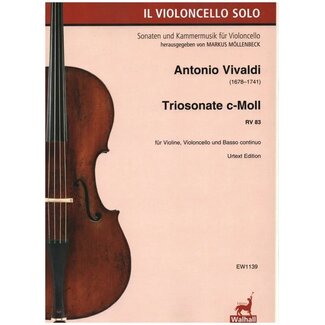
"The key of C minor lends the entire work a serious and rather subdued character. In all movements, the violin is assigned the leading role, introducing the themes that the cello then imitates.
The first movement is the densest in terms of motivic and harmonic structure: stormy arpeggiated triads alternate with shared, anapestic figures a sixth apart, interrupted only by short, soaring solo episodes for the two solo instruments.
At the beginning of both parts in the cantabile middle movement is an exclamatio, an upbeat, ascending minor sixth. As in all movements, the solo episodes for the cadences of the various sections between violin and cello rhythmically lead to the same motifs a third or sixth apart.
" The concluding movement, also in two parts, is a minuet in which the motifs of the first movement reappear, but in reverse order: It begins with an anapestic theme, interrupted by an imitative sixteenth-note figure. United in the rhythm of an eighth note with four sixteenth notes, both instruments insist with the help of two five-bar phrases and conclude the work.