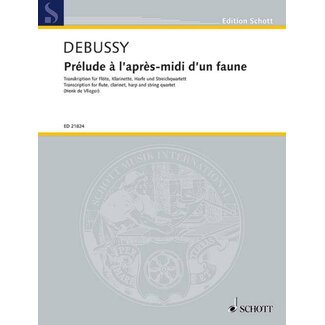
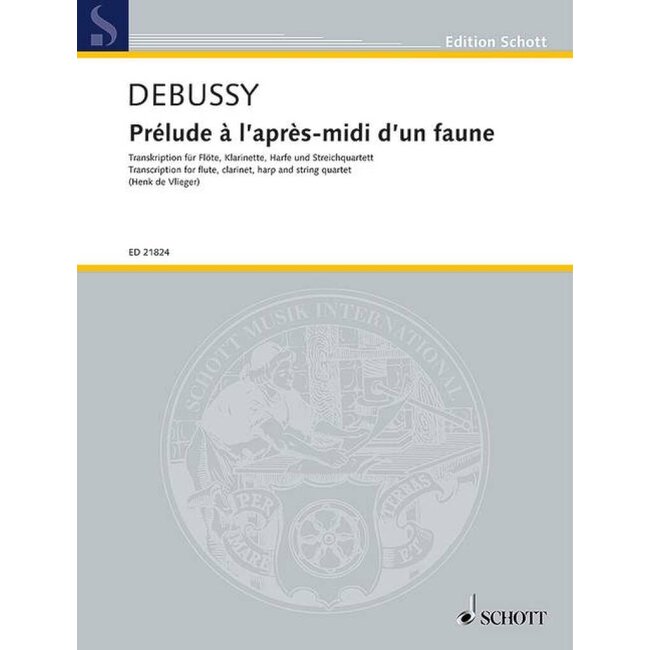
Prélude à l'après-midi d'un faune (Prelude to the Afternoon of a Faun) is a symphonic poem for orchestra composed by Claude Debussy. The piece, which lasts approximately ten minutes, is considered a highlight of Musical Impressionism and a turning point in modern music. It gained widespread fame through the ballet performance by Vaslav Nijinsky in 1912. When writing his composition, Debussy was inspired by the Symbolist poem L'après-midi d'un faune by Stéphane Mallarmé, which was particularly popular in Impressionist circles. The poem, which tells the story of a faun and his daydreams on a sultry afternoon, had previously been set to canvas by the painter Édouard Manet. Mallarmé's poetry possesses a high degree of 'musicality' and caught Debussy's attention after reading a review in the Symbolist magazine 'La Vogue' in 1887. Deeply impressed by the poem, he began working in 1890 on a version to accompany a recitation, which, however, was never performed. In 1892, he subsequently began working on a suite, *Prélude, Interlude et Paraphrase finale sur l’après-midi d’un faune*.
Ultimately, it would remain just the prelude. In 1893, he played a piano version for friends for the first time; subsequently, he completed the orchestration in 1894, after which the premiere took place on December 22, 1894, in Paris, at the Société Nationale de Musique.