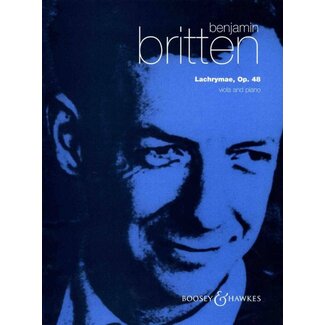
This ghostly piece is one of the most serious of Britten’s chamber music utterances. He brings from the viola a range of sounds that show off the instrument’s silvery sound, and from the off, when the piano’s left hand solemnly intones Downland’s theme like a chant, the viola is hovering above, its double stopped notes taking on the profile of a restless bird.
Some of the slower writing – particularly in this viola and piano version – points not towards future English music but to the colours used by Eastern European composers such as Gubaidulina, Górecki and Arvo Pärt. The sudden outburst from the piano in left hand octaves which begins the sixth reflection (Appassionato) is proof positive of this, as is the eerie sound of the cold right hand of the piano slowly chiming with the harmonics of the viola in the tenth reflection, marked Lento .
Here the to and fro between the two instruments is spooky, with no comfort to be found, especially when the urgent tremolos of the penultimate section (L’istesso tempo) begin. But then there is a sense of release and Dowland’s theme is heard in full, the piece reaching a resolution that would never have been possible had Britten begun with the theme itself. In that sense Lachrymae, as well as being a profoundly emotional utterance, becomes a masterly reinterpretation of a very familiar form.