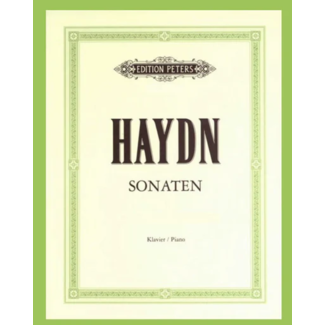
Haydn´s earliest surviving keyboard sonatas were most likely composed during the period before 1760, while he survived by teaching piano. Probably a lot of similar works have been lost because Haydn gave the manuscripts to his students without making copies. Most of these sonatas are short, relatively easy and in a three-movement format (fast-minuet-fast). From the mid-1760s the Sonatas are weightier and have much larger structures, with substantial slow movements. During the 1770s, Haydn composed at least 18 keyboard sonatas, published in sets of six. The one in C minor stands out as one of the masterworks of Haydn´s Sturm und Drang period. The three sonatas of 1784 are interesting formal experiments; each is in two movements and only one movement is in sonata form. The late sonatas were written in connection with Haydn’s visits to London and 52 were written for Therese Jansen, a leading English pianist. They give evidence not only of Jansen´s formidable technique, but also of the more powerful sonority of the English piano in comparison to its continental counterparts.