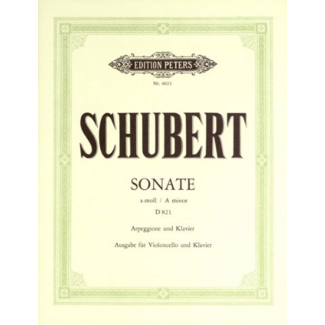
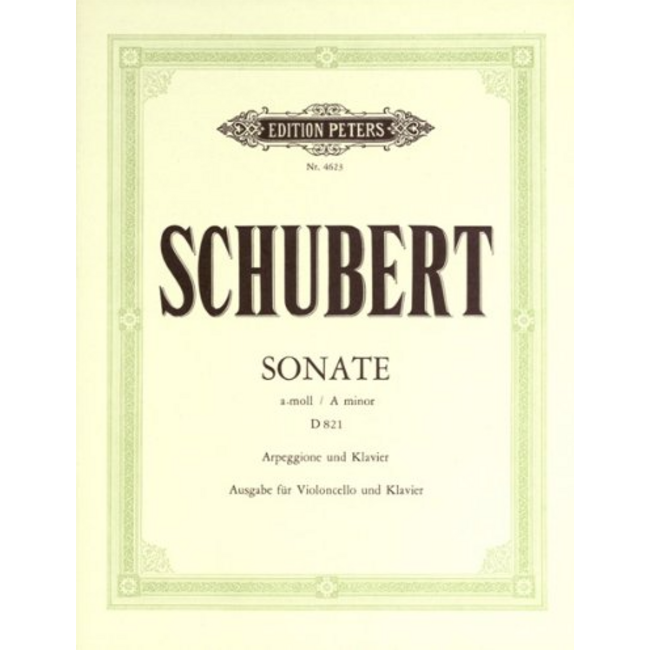
The Sonata for Arpeggione and Piano in A minor, D. 821, was written by Franz Schubert in Vienna in November 1824. The sonata is the only substantial composition extant today for the arpeggione (which was essentially a bowed guitar). The sonata was composed in November 1824, about a month after Schubert had returned to Vienna from his second stay in Zseliz. It has been adapted to other string instruments, especially the cello.
The piece was probably commissioned by Schubert's friend Vincenz Schuster, who was a virtuoso of the arpeggione, an instrument which had been invented only the previous year. By the time the sonata was published posthumously in 1871, the enthusiasm for the novelty of the arpeggione had long since vanished, together with the instrument itself.