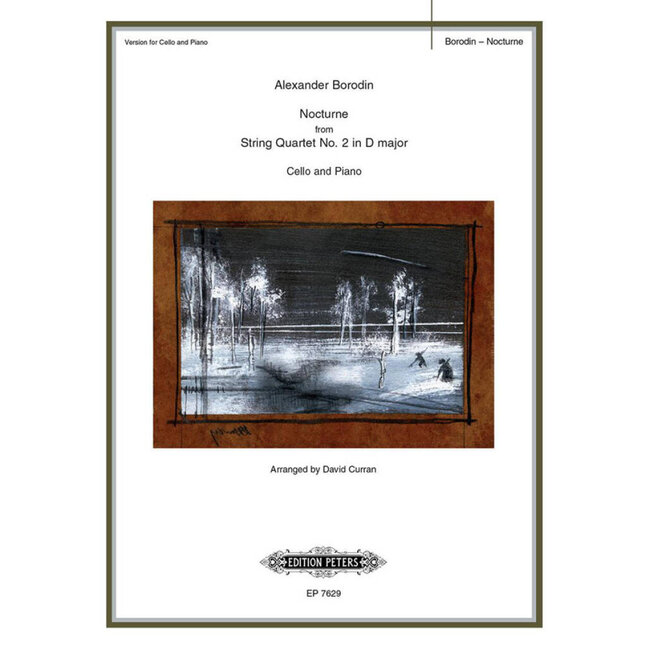
Borodin's Second Quartet in D was dedicated to his wife, and was written as a remembrance of their courtship in Heidelburg. It has four movements, and this piece is an arrangement of the third movement, Nocturne. Nocturne is both lyrical and rhapsodic with a sweet and expressive melody. Nocturne's melody was re-used in the 1853 musical Kismet for the song And This Is My Beloved, and a string orchestra arrangement of Borodin's Nocturne is a popular part of orchestral literature today. Borodin's expressive markings at the beginning of Nocturne are cantabile ed espressivo, meaning play expressively in a singing, vocal style. Use smooth, flowing bows to achieve this singing style of playing. You also may want to pay attention to the eighth note rests in the piece, and play them as if they were breaths taken by a singer (use slight pauses to create this effect).