Combining Larsen Original, Soloist, and Magnacore strings is a widely used strategy to optimize a cello's timbre and projection per register. Because every cello responds differently, a mix helps strike a balance between warmth in the highs and power in the lows.
Why this specific combination?
The most common reason for this mix is to create a smooth transition between the bright top end and the deep bottom end of the instrument:
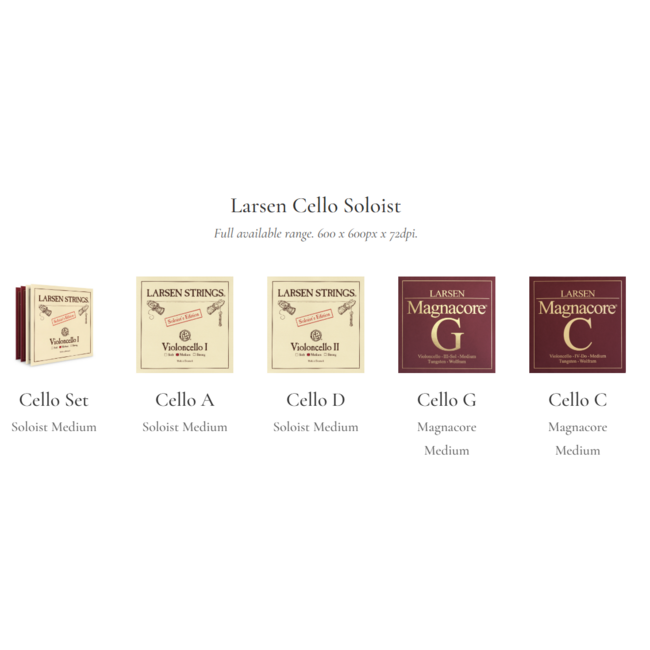
- Larsen Soloist (A & D): These are often chosen for the upper strings due to their focus and projection. They "sing" more than the Original line and cut through the texture of an orchestra better;
- Larsen Magnacore (G & C): These strings are known for their immense power and rich overtones in the low register. They offer more depth and a "broader" sound than the standard Larsen bottom end, which helps to "open up" a cello;
- Larsen Original (A or D): Sometimes an Original A or D is used instead of the Soloist if the cello is already very bright on its own. The Original then offers the necessary warmth and roundness to prevent the sound from becoming shrill;
Popular combinations:
- The "Powerful" Mix: Soloist A & D combined with Magnacore G & C. This produces a very professional, soloistic sound with maximum dynamics;
- The "Warm" Mix: Original A & D with Magnacore Arioso G & C. The Arioso variant of Magnacore has lower tension, resulting in a rounder, singing sound that is easier to play;
- The Balance Solution: Some cellists even mix within the upper strings, for example, a Soloist A for extra sparkle and an Original D for a warmer transition to the lower strings.
What to look out for:
- String tension: Magnacore strings often have higher tension. Ensure that the tension of the A and D strings (e.g., Medium or Strong) matches this so that the transition feels natural while bowing.