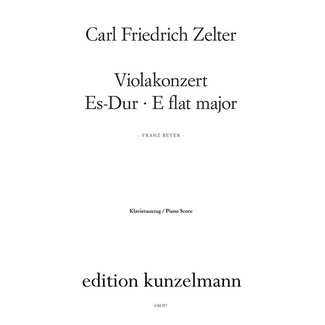
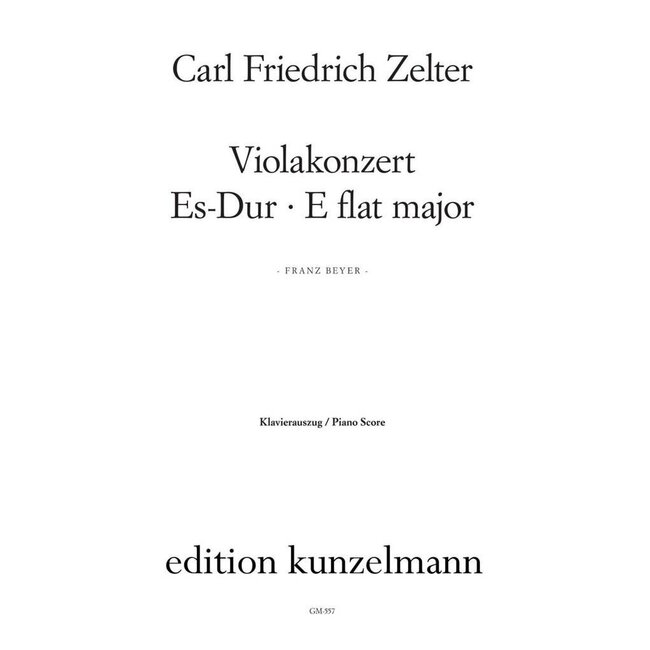
Carl Friedrich Zelter's Viola Concerto in E-flat, composed by the second director of the Sing-Akademie zu Berlin, is today, alongside Georg Philipp Telemann's Viola Concerto in G and the Viola Concertos in D by Carl Stamitz and Franz Anton Hoffmeister, indisputably part of the canon of classical concert repertoire for solo viola. The circumstances of its composition, however, are entirely unconventional. The event is recounted by Carl Friedrich Zelter himself in his biographical sketches (edited by Johann-Wolfgang Schottländer). According to Zelter, the concerto came about as part of an exchange between him and two other people, in which Zelter, in return for his newly composed viola concerto, was borrowed the score of Georg Benda's Ariadne auf Naxos to copy. He continues: "Now I had also finished my viola concerto. It was the first real attempt in modern times to offer something more in a concerto than simply playing, more than just letting the music be heard. A pathos-laden Allegro was intended to create a serious mood, followed by a deeply moving Adagio, which was meant to create a sense of unease and great effort, ultimately rising to a state of carefree ease in the Rondo and bringing the whole to a cheerful close. The concerto itself, however, was intended to be a unified whole, and therefore I had woven something from the Adagio into the Rondo that was performed in a recitative style. [...] I knew only too well how I was so upset about this concert, in order to make my intention for it somewhat clear. This intention consisted of nothing less than delivering a classical work and establishing myself among connoisseurs.