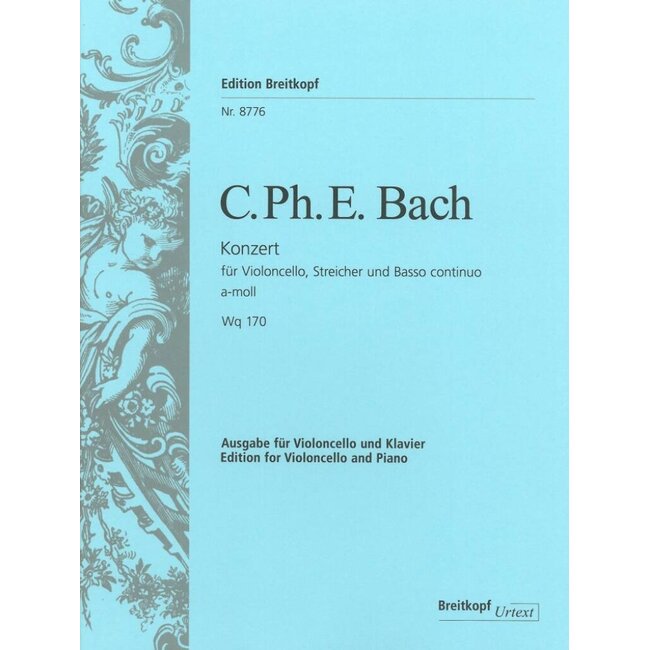
Carl Philipp Emanuel Bach (born March 8, 1714, in Weimar; died December 14, 1788, in Hamburg), also known as the Berlin or Hamburg Bach, was a German composer and church musician from the Bach family who worked during the transition between the Baroque and Classical periods (Early Classical). He was the most famous of the Bach sons and enjoyed admiration and recognition in Protestant Germany during the second half of the 18th century, particularly as a teacher and composer of works for keyboard instruments.
C.P.E. Bach transformed the musical language at the end of the Baroque, and as part of this process he also elevated the role of the cello, so that as a solo instrument it became the equal of the keyboard, violin and flute. This new balance is represented by the presentation of Bach’s concertos in multiple forms: the solo parts for the cello concertos were also arranged for harpsichord and flute. Although it is tempting to speculate that the cello versions were composed first, or specifically with the cello in mind, it is also quite possible that Carl Philipp could, first of all, handle the composition of three versions simultaneously, and, second, that he, like his father, was accomplished on a variety of instruments but was primarily a keyboard player. Nonetheless, the rich textures and compelling virtuosity of the concertos for cello make a persuasive case that the Carl Philipp--who occasionally cut a few compositional corners for lesser commissions--invested his best efforts in these concertos, which show a composer willing and able to emerge from the shadow of his extraordinary father, J.S. Bach.